

The Architect's Guide to AI Integration: Medallion Pipelines & LLMs
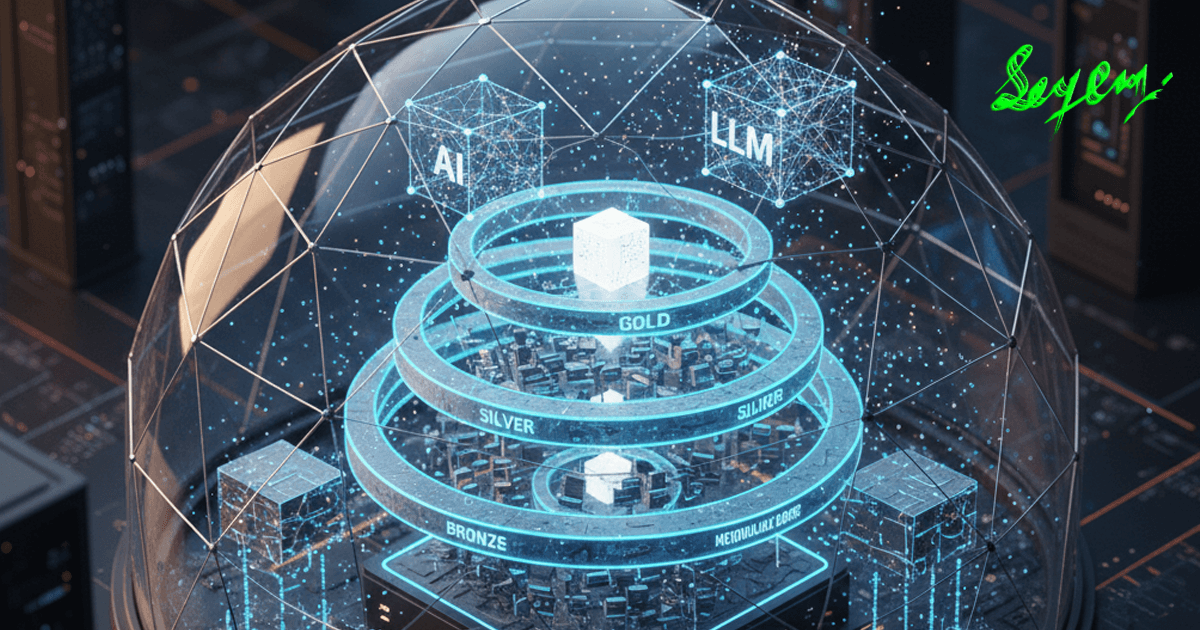
The Great Divide: Bridging Data Science and Engineering
For years, I've watched the dance between Data Science and Engineering. Data Scientists often work in an iterative, exploratory fashion, while Engineers build for scale and reliability. When integrating LLMs, this divide can become a chasm. Successful integration isn't about one team winning; it's about building shared, structured data flows that move beyond Jupyter notebooks and into production-grade environments.
The Medallion Architecture: Our North Star
The Medallion Architecture is a three-layered approach to refining data, moving from raw to highly curated.
Bronze (Raw): The landing zone. Data is captured exactly as it exists at the source.
Silver (Cleaned): We apply deduplication and schema enforcement. This is the source of truth for business-ready data.
Gold (Curated): High-value data optimized for specific AI models or LLM context.
LLMs and the Medallion: Fueling the Intelligence
LLMs are only as good as their context. The Medallion layers provide the perfect foundation for Retrieval Augmented Generation (RAG). By hosting optimized vector stores in the Gold layer, we ensure LLMs have grounded, accurate, and up-to-date information, significantly reducing the risk of hallucinations in enterprise applications.
Tools of the Trade: Orchestration, Custom ETL, and Hybrid Realities
Implementing a Medallion Architecture requires robust orchestration, but we have to be pragmatic about where the work happens. While tools like Azure Data Factory, AWS Glue, or Databricks are industry standards for massive scale, they aren't always the answer.
In my experience, time-sensitive or highly sensitive data often demands that we define and run our own ETL processes locally or on-prem. If data can't leave the building due to sovereignty laws, or if the latency of a cloud round-trip would break the user experience, we build custom processing engines - often using Spark, Flink, or even optimized Python/Go services - to handle the Bronze-to-Silver transition before selectively syncing to the cloud.
Ultimately, the goal is a living data ecosystem. Whether you use a managed service or a custom-built local engine, the discipline of MLOps remains the same: version your data, automate your deployments, and monitor your pipelines as strictly as you monitor your models.
"Integrating AI isn't magic; it's meticulous engineering. Whether on-prem or in the cloud, the quality of your pipeline determines the intelligence of your model."